Article Series

How to become an AI-ready manufacturing company

Part 4: From Bottlenecks to Self Service as a Strategic Lever

BY JAKOB HUUS ANDREASEN

In the previous article, we highlighted how structured product data and the integration of PIM, ERP, and DAM systems create a shared data foundation across markets and languages.

In this article, we examine another barrier to scale: orders, inquiries, and confirmations that are still handled manually even though the core systems are in place.

How many hours do you spend on manual data entry?

Manufacturing companies operating in global markets often face a paradox.

They produce advanced technology solutions with global demand, yet their back-office processes remain insufficiently digitized. These cumbersome processes prevent the business from scaling.

If every new order requires manual data entry and email exchanges, the business is not truly scalable. The result is an invisible ceiling that limits growth.

The biggest business challenge is not the products or the competition. Production can usually keep pace as well. Manual order entry and email exchanges are often the real bottleneck for a network of dealers and sales agents.

With AI & Automation

More Growth, More Problems. It doesn’t have to be that way.

For companies that generate most of their revenue from exports, we call this manual workflow a "growth killer." The more successful the export business becomes, the greater the administrative burden is on headquarters.

The goal is not to do more with fewer people. It is to stop asking skilled employees to move data by hand by copying information from emails and documents into the ERP system.

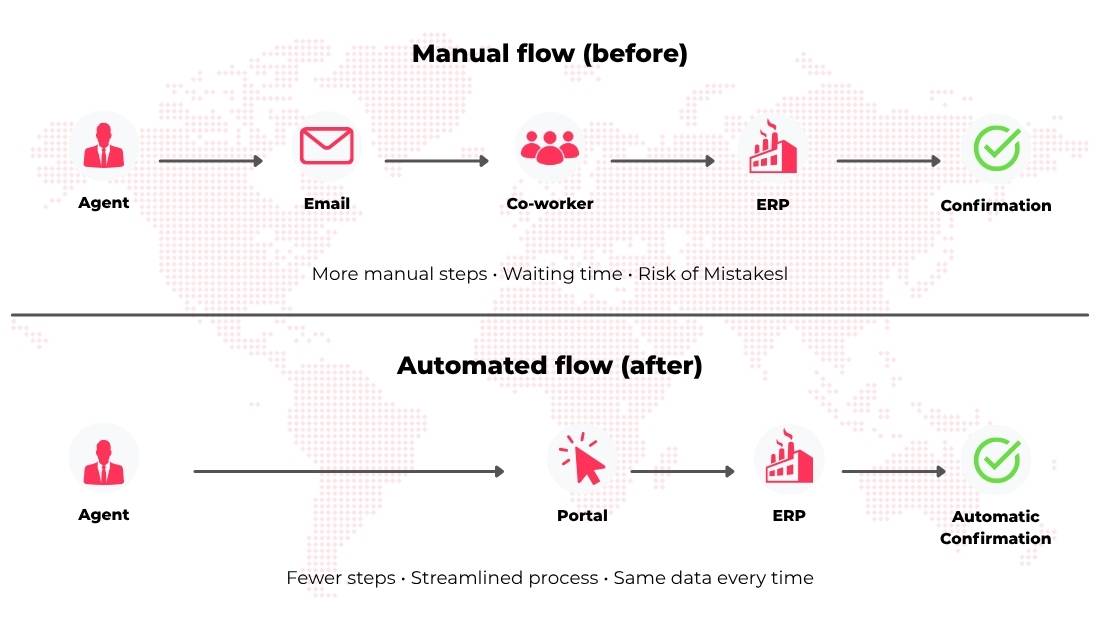
A logical next step is to automate order intake outside the ERP system. Through a digital portal, sales agents and customers can find products, view relevant prices, place orders, and receive order confirmations. Validated orders are transferred automatically to the company's ERP system and other core systems.

Digital self-service

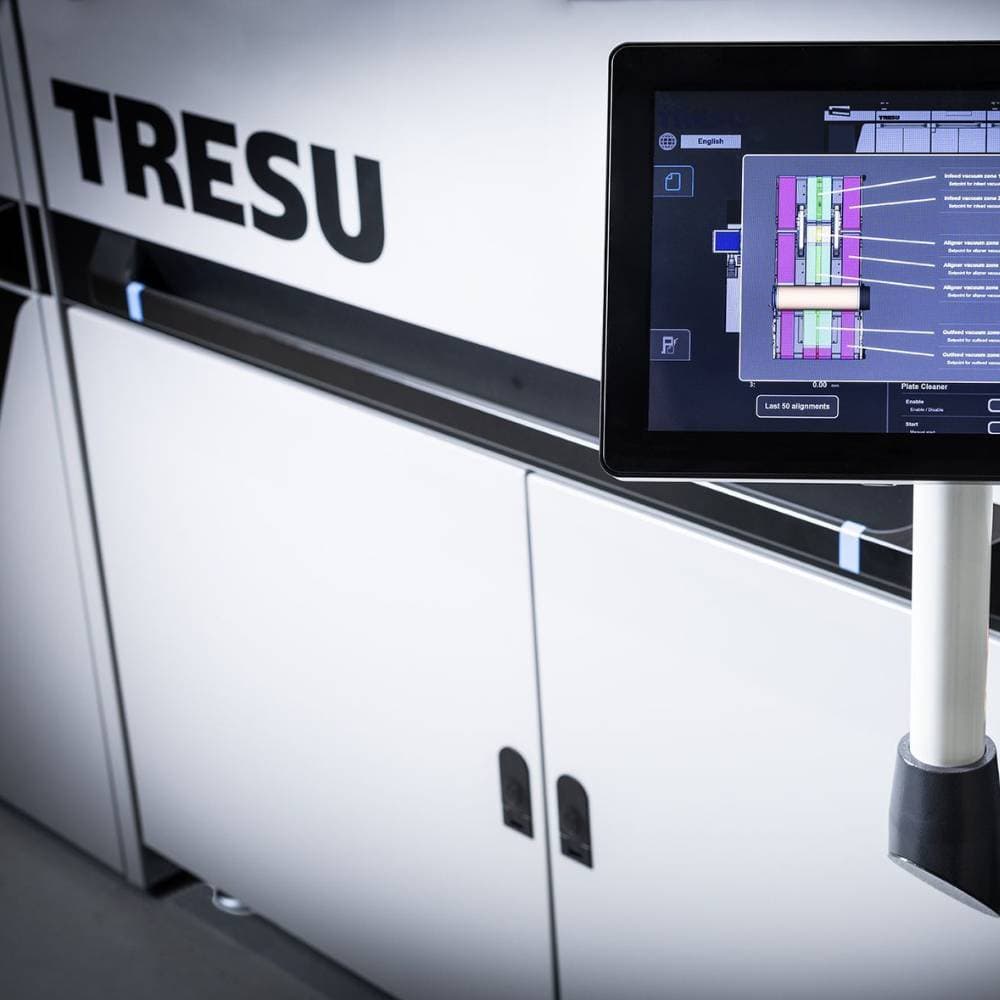
TRESU

Read how Danish export company TRESU delivers a better purchasing experience through its international customer portal and makes it easier for back-office employees to run the digital business.

Read the case

Self Service as a Strategic Lever

A digital interface can make information available as reference material and sales sheets. The next step is to add self-service.

With the full data model in place, you can add e-commerce to the customer portal, allowing sales agents and end customers to place orders from any time zone. In many cases, even complex products can be supported digitally through tools such as product configurators and digital quoting workflows.

Standard products and spare parts are often the best place to start.

First, it eliminates a significant amount of routine tasks for customer service.

Graphic of manufacturing order flow with and without automation

The benefits of digital self-service include

The journey toward digital self-service shows that manufacturers do not necessarily need a larger workforce to scale globally.

The priority is to build a strong digital foundation that brings international sales agents into the administrative process and makes them active participants in the digital value chain.

This creates the foundation for integrating AI into your business processes.

In the first four articles, we have explained how to build the digital foundation. Once that foundation is in place, your data is structured, and many processes are automated, are you then ready to roll out AI? Have you developed the necessary strategy to ensure that AI does not remain an isolated pilot project?

Are your employees spending too much time on manual order entry and email exchanges?

Contact us to learn how we can help digitize your order flow and turn self-service into a strategic lever.

Image of Jakob Huus Andreasen

Jakob Huus Andreasen

Director of Sales

Mobile: +45 23 25 26 12

Email: jha@alpha-solutions.com