Well, it could be. But export-driven manufacturers need to understand that AI is not a magic tool that can instantly streamline and take over critical tasks overnight.
Instead, AI acts like a magnifying glass. It dramatically increases the value of high-quality, structured data. But when data is unstructured and managed without a strategy or proper security controls, AI amplifies the existing data chaos.
When a customer or sales agent in an export market uses AI tools to find and compare products, the data must be accurate, up to date, and available in the relevant language. An AI assistant has no human intuition; it cannot determine whether a local manual is the latest version. If the data is fragmented and inconsistent, the AI solution will provide unreliable answers, potentially including information that should never be shown to an agent or end customer.
For example, it is not enough for an AI tool to find a price. It must also know whether that price applies to the specific customer, the relevant market, and the correct product variant. A fast answer is not necessarily an accurate one.
AI Requires Data Strategy and Leadership
We have already discussed the PIM system as the hub of the digital export business. Authoritative product data and a shared data model are prerequisites for any AI initiative. Do you have an architecture that can provide data to both your own AI solutions and the large language models your customers use?
AI readiness does not come from one large, unwieldy project. It starts with mapping your current data environment. That means answering questions such as:
Where is product data actually maintained today?
How many versions exist across subsidiaries and sales agents?
Where do the sales channels farthest from headquarters obtain their materials?
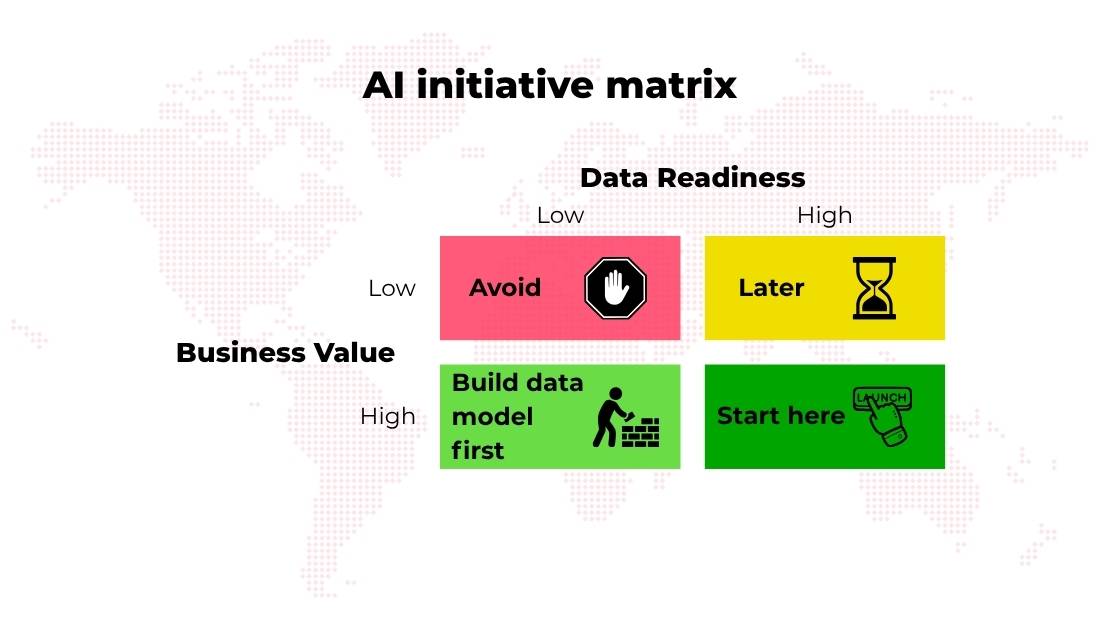
Asking the right questions brings you closer to a strategy. Where could an AI tool make the greatest difference for your business?
Start with a clearly defined area, such as ensuring complete, high-quality data for spare parts or one specific export market. Then establish the first building block for a solution in which data flows automatically and is machine-readable.
The foundation for AI is really just common sense applied systematically: Maintain one accurate source of data and move forward one step at a time.